Table of Content
Consequently, the term of the loan could not change unless the loanee did not pay the loan. Due to the fact that HOLC obtains loans by providing a bond value equal to the amount of principal owing by the borrower, most of the lenders have benefited from the sale of their loans. This is because of the high-interest rate which if not paid at the right time, accumulates. Home Owner’s Loan Corporation was established to help manage this situation. Before the pandemic devastated minority communities, banks and government officials starved them of capital.
The HOLC was attempting to keep from selling too many homes too quickly in order to prevent negative impacts on prices of housing. This is also in contrast to loans offered by Building and Loans (B&L) in the 1920s, which typically ran between 10 and 12 years. HOLC is often cited as the originator of mortgage redlining, although, this claim has also been disputed.
Did the HOLC refinanced mortgages?
Additionally, most of the HOLC graded “Hazardous” areas (nearly 64%) are minority neighborhoods now. In 3 years the HOLC refunded the overdue mortgages of more than 1 million families with long-term loans at lower interest rates. FHA loans—mortgages insured by the Federal Housing Administration and issued by an FHA-approved lender—are still in existence today. Designed for low-to-moderate-income borrowers, they require a lower minimum down payment and lower credit scores than many conventional mortgages. The HOLC tried to prevent selling too many houses in a short time in order to prevent negative impacts on the housing market. Overall, over 800,000 people paid back the HOLC loan, while a majority paid them off early enough.
That’s in helping hundreds of thousands of families to maintain themselves as self-reliant homeowners. From the first year till the last year HOLC existed, it functioned effectively. It didn’t just functioned sucessfully in terms of dollars and cents, in terms of human values. It was in the midst of these crises that the Home Owners Loan corporation was formed.
HOLC
75th Anniversary of the Wagner-Steagall Housing Act of 1937 The Home Owner’s Loan Corporation was created in 1933 to provide mortgage relief to home owners at risk of losing their homes through foreclosure. The HOLC was established in June 1933 to help distressed families avert foreclosures by replacing mortgages that were in or near default with new ones that homeowners could afford. A 2020 study in the American Sociological Review found that HOLC led to substantial and persistent increases in racial residential segregation. A 2021 study in the American Economic Journal found that areas classified as high-risk on HOLC maps became increasingly segregated by race during the next 30–35 years, and suffered long-run declines in home ownership, house values, and credit scores. Furthermore, it offers institutions, loan associations and other real estate investors to exchange defaulted mortgages for $2 3/4 billion in cash and Government bonds.. Through earnings on its loans, it has paid its own administrative expenses, and offset the real estate losses which it had to meet.

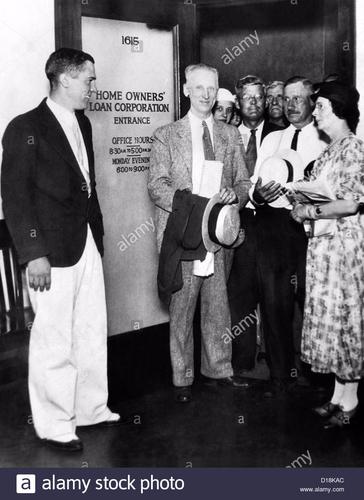
Instead, the agency purchased and refinanced mortgages in default or foreclosure from financial institutions . In exchange for mortgages, the HOLC gave lenders government bonds paying 4 percent interest . Treasury, the HOLC was authorized to issue $2 billion in bonds, an amount eventually increased to $4.75 billion. During a peak period in the spring of 1934, it processed over 35,000 loan applications per week and employed almost 21,000 people in 458 offices throughout the country. The law authorizing the HOLC's lending activities expired on June 12, 1936.
What effects did the Great Depression have on the credit industry?
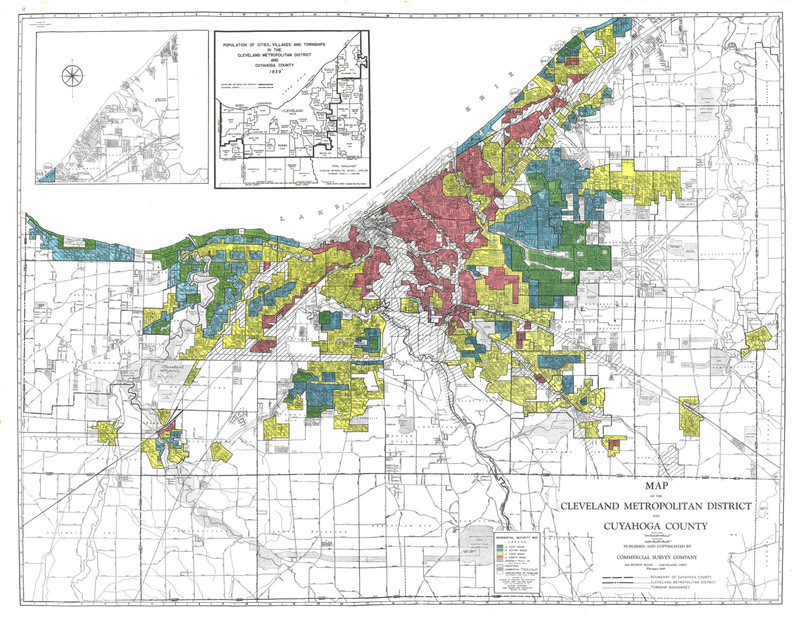
Indeed, with HOLC mortgages refinanced at 5 percent interest over fifteen years, home ownership became feasible for those who had been previously unable to afford short-term mortgages at high interest rates. 20,000 and declined to less than 500 The Home Owners' Loan Corporation was a government-sponsored corporation created as part of the New Deal. NCRC has taken these maps and compared the grading from 80 years ago with more current economic and demographic status of neighborhoods as low-to-moderate income , middle-to-upper income , or majority-minority. To a startling degree, the results reveal a persistent pattern of both economic and racial residential exclusion. They provide evidence that the segregated and exclusionary structures of the past still exist in many U.S. cities. In the 1930s the federal government began redlining real estate, marking “risky” neighborhoods for federal mortgage loans on the basis of race.
The FHA, by extending mortgage insurance to lenders, encouraged banks to liberalize financing terms for potential homeowners. Thus, while the HOLC and the FHA assisted some Americans in keeping their homes or in purchasing new ones, they both used redlining to prevent minority groups, especially African Americans, from doing likewise. This practice helped perpetuate and extend the pattern of segregated neighborhoods and suburbs throughout America. Some commentators, however, criticized the HOLC's practice of indirectly assisting home owners through programs that directly aided mortgage lenders.
A study released in 2018 found that 74 percent of neighborhoods that HOLC graded as high-risk or "hazardous" are low-to-moderate income neighborhoods today, while 64 percent of the neighborhoods graded "hazardous" are minority neighborhoods today. “It’s as if some of these places have been trapped in the past, locking neighborhoods into concentrated poverty,” said Jason Richardson, director of research at the NCRC, a consumer advocacy group. There is significantly greater economic inequality in cities where more of the HOLC graded high-risk or “Hazardous” areas are currently minority neighborhoods. To a lesser extent this is also true of cities where more of the HOLC low-risk or “Desirable” areas have remained white. This could indicate that cities with less change in the racial and ethnic structure of their neighborhoods over the past 80 years have greater economic inequality today. The corporation was established in 1933 by the Home Owners’ Loan Corporation Act under the leadership of President Franklin D. Roosevelt.

HOLC was established as an emergency agency under Federal Home Loan Bank Board supervision by the Home Owners’ Loan Act of 1933, June 13, 1933. Foreign Exchange Regulation Act to regulate certain payments dealing in foreign exchange, securities, import & export of currency. National Industry Recovery Act It set up the National Recovery Adminstration and set prices, wages, work hours, and production for each industry. The Great Depression and Credit During the Great Depression of the 1930s, thousands of banks folded, robbing millions of Americans of their savings. Savings in banks were never insured, and as more people and businesses tried to withdraw their funds, the banking crisis intensified. As long as all parties knew the seller was becoming a cosigner and was being removed from the deed, and the lender would lend the money under these conditions.
The HOLC was established pursuant to theHome Owners' Loan Corporation Act. In June 1933, the Home Owners' Loan Act, following the president's lead, sailed through Congress. The law authorized $200 million to set up the Home Owners' Loan Corporation with authority to issue $2 billion in tax-exempt bonds. The money raised would enable the HOLC to rescue imperiled mortgages by offering financing up to 80 percent of assessed value, to a maximum of $14,000. There followed a rush to file applications in 1934 by those holding 40 percent of all mortgaged properties, of which half with lowest risk were accepted.
The HOLC was authorized to make loans from June 13, 1933 through June 12, 1936. The home owners' loan corporation was a fed. eral program established in 1933 to provide relief to distressed residential mortgage. Home Owner’s Loan Corporation also known as HOLC is a government owned body that aims at refinancing home mortages.
In the depression years, they scrimped and sacrificed to meet their monthly payments; in later years, when times were better, they often made payments in advance--many paying off their debts in full far ahead of schedule. The act, which went into effect on June 13, 1933, provided mortgage assistance to homeowners or would-be homeowners by providing them money or refinancing mortgages. The Corporation lent low-interest money to families in danger of losing their homes to foreclosure. The National Housing Act paved the way for the creation of the Federal Housing Authority and the Federal Savings and Loan Insurance Corp. , which helped low-income families buy homes. The FSLIC insured mortgages, making it possible for federally chartered lenders to give out long-term loans.
“Type D” neighborhoods were outlined in red and were considered the most risky for mortgage support. Specifically, the chapter compares how two federal lending programs—the Home Owners' Loan Corporation and the Federal Housing Administration —carried out their respective missions, and their long-term consequences for metropolitan America. The typical borrower who that was refinanced by HOLC was more than two years behind in the repayments of the loan, and more than two years behind in paying taxes for the home. In the wake of the publication of Kenneth T. Jackson’s work in the 1980s, researchers have been increasingly portraying HOLC as a major driver of redlining and as an agent of racial segregation as well as racial wealth inequality across the United States. Buyers and borrowers couldn’t meet mortgage payments due to a high increase in unemployment and income reductions.


No comments:
Post a Comment